Models of our 4 bulkheads that contain Nitrous Oxide, Fuel, and Gaseous Nitrogen
Bulkhead 1:
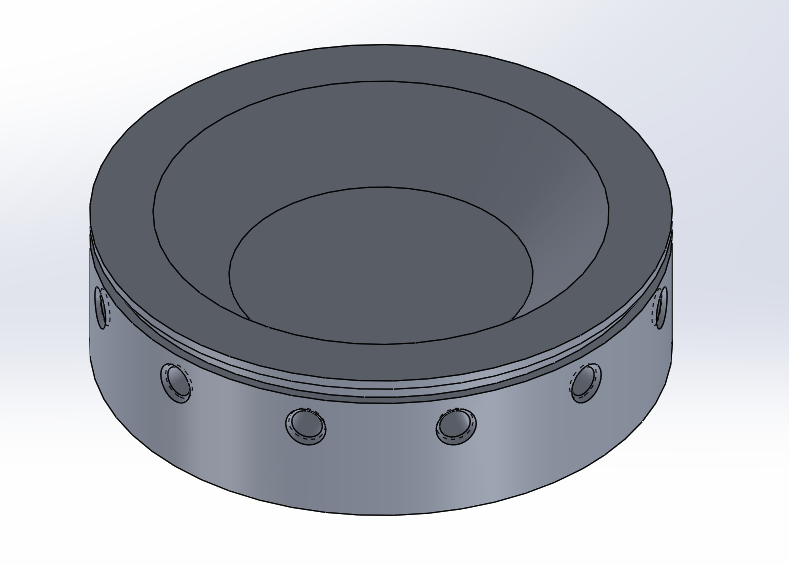
The uppermost bulkhead, which contains the nitrous oxide, was designed to withstand 1500 psi, meeting our requirement of a factor of safety of 2. On the bottom side of this bulkhead, we included six ¼”-20 tapped holes to attach the rest of the rocket to the lower stack, including the recovery and avionics systems.
We also used a 3/8”-16, 12-bolt pattern around the perimeter to seal the bulkhead to the tank, allowing it to function as a sleeve. An O-ring is incorporated to prevent minor leaks.
To reduce weight, we added a divot in the bulkhead. The initial design weighed around 20 lbs, which we worked to reduce as much as possible in order to improve the overall thrust-to-weight ratio.
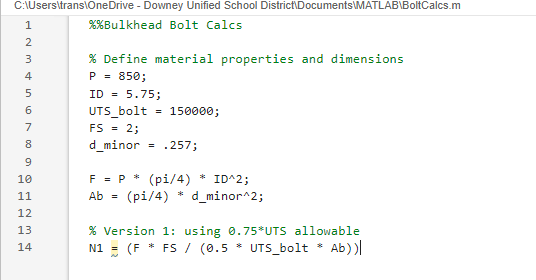
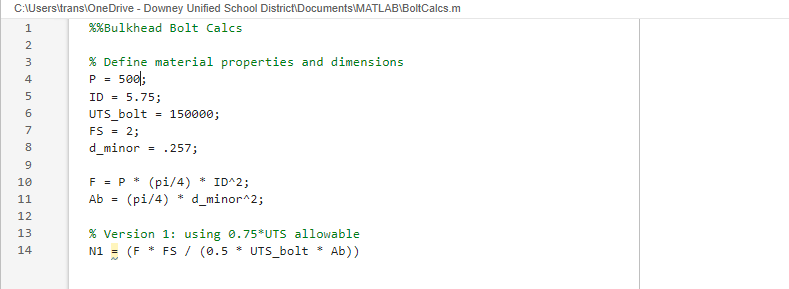
Equation & Script made to calculate bolts need:
Bulkhead 3:
Bulkhead 3 is my favorite, as it allows the fuel to be back-pressurized by the GN₂ system. The top will be threaded with a ¼” NPT tap, where we attach a pressure regulator to maintain a constant 100 psi of back pressure.
We also included a ¼” NPT tap for filling ethanol, although this ended up being unnecessary since the ethanol will likely be loaded prior to pressurization.
The bolt calculations remain the same as the previous bulkhead, as this component could potentially experience a failure case where pressure rises up to 500 psi.
Bulkhead 2:
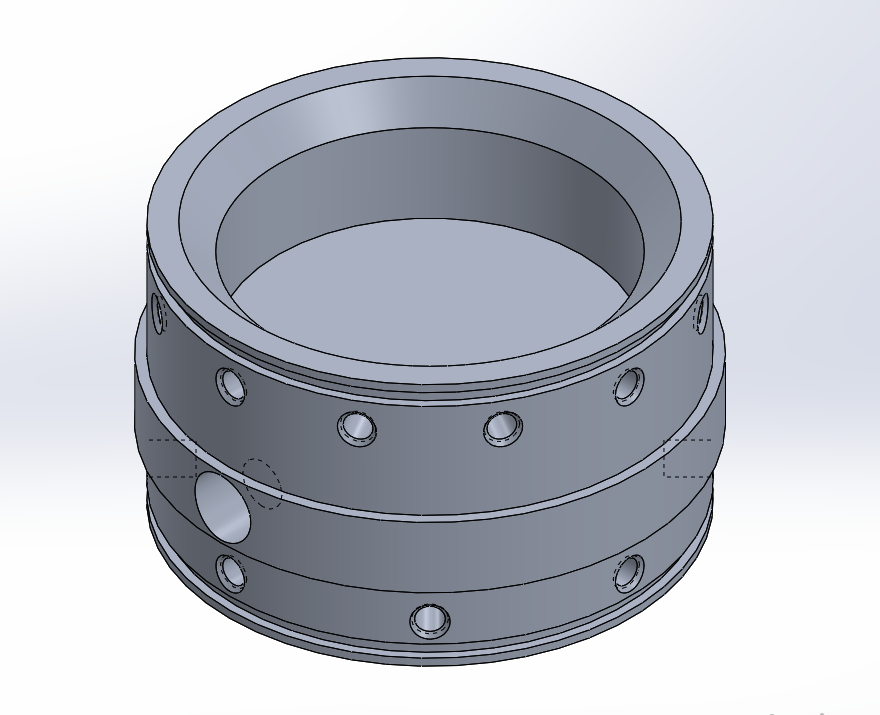
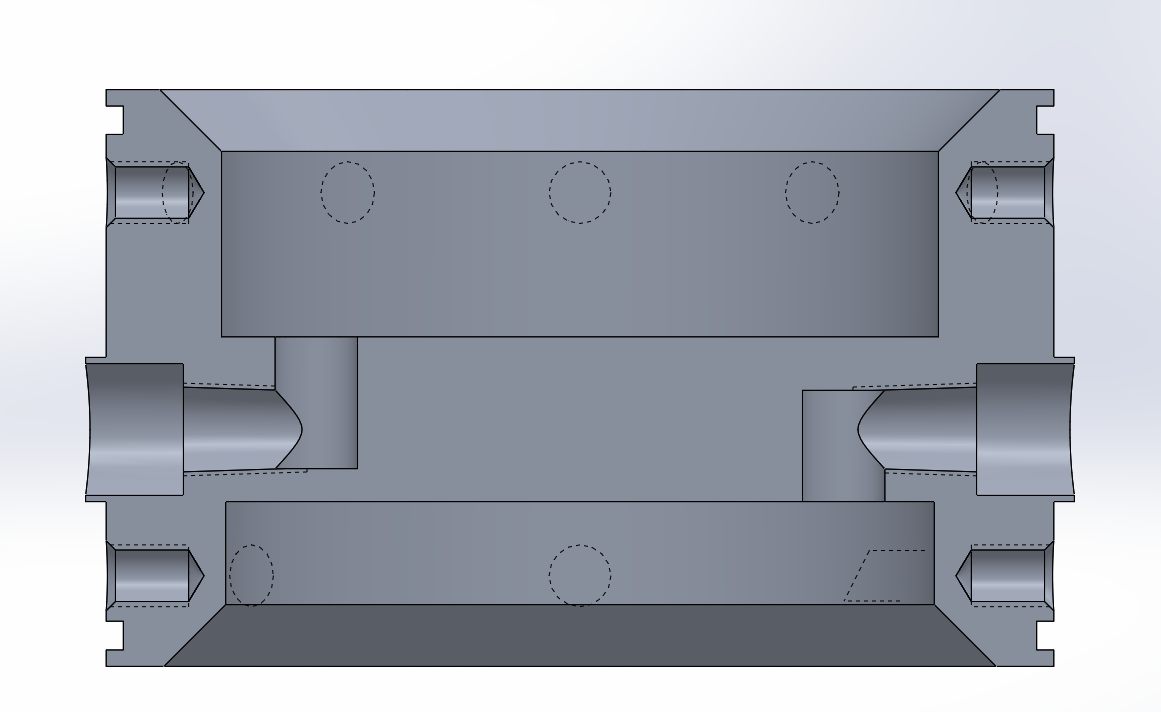
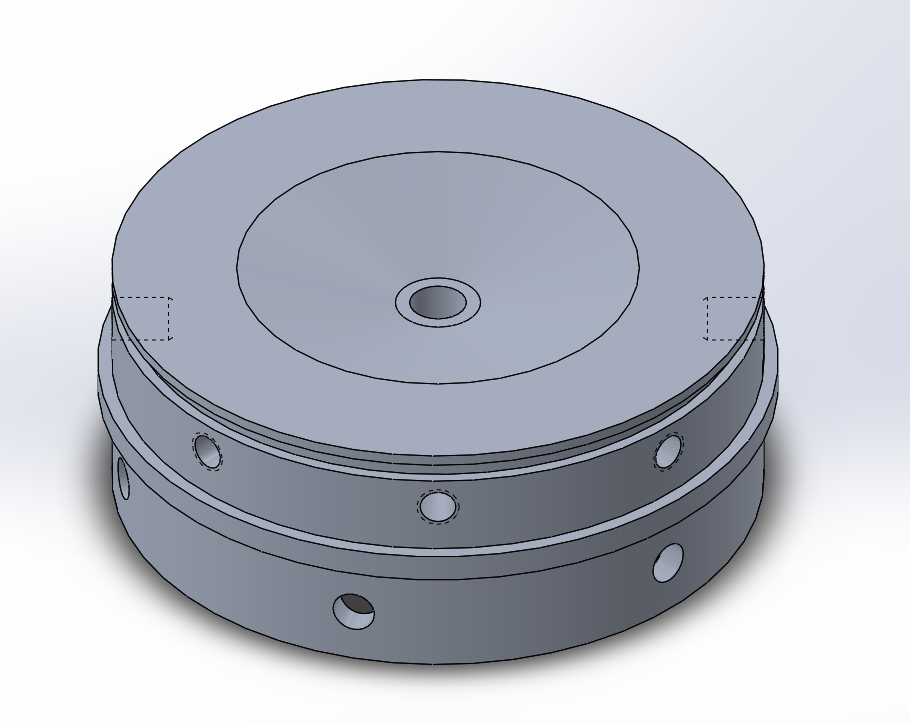
These are images of our second bulkhead, which connects the nitrous oxide and gaseous nitrogen systems. The bolt pattern remains the same on the nitrous oxide side, but fewer bolts are used for the gaseous nitrogen side since it is only pressurized to around 100 psi. The gaseous nitrogen acts as a back-pressure system for the ethanol, allowing it to be properly fed into the pump.
From the bottom view, there are two ¼” NPT taps: one for the nitrous oxide, which flows upward, and one for the gaseous nitrogen, which flows downward. We ensured there was sufficient material around the internal channels to prevent any risk of rupture.
Although the system is intended to operate at 100 psi for gaseous nitrogen, we designed and analyzed it for up to 500 psi to provide a safety margin and ensure reliable back-pressurization.
Bulkhead 4:
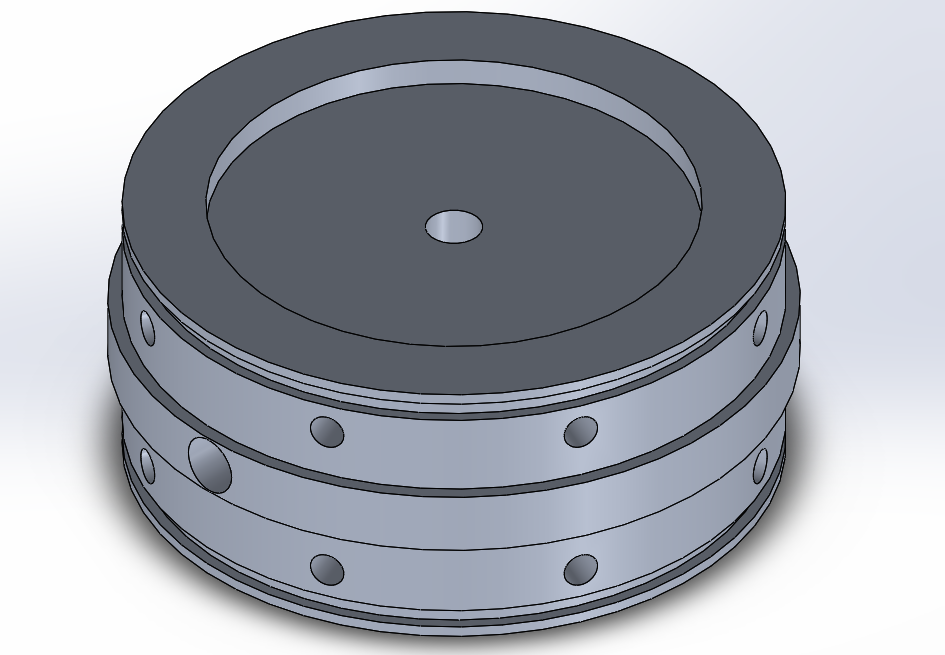
Bulkhead 4 connects the fuel system to the pump. We included an angled slope in the bulkhead to ensure that all of the fuel is directed toward the pump, minimizing any leftover ethanol that could pose a risk to the recovery team.
The bottom of the bulkhead features a standard hole pattern to match the pump tank, along with a radial hole pattern on the bottom face to allow the pump to be mounted directly.