On the liquid Project I work as the Lead who runs the DAQ
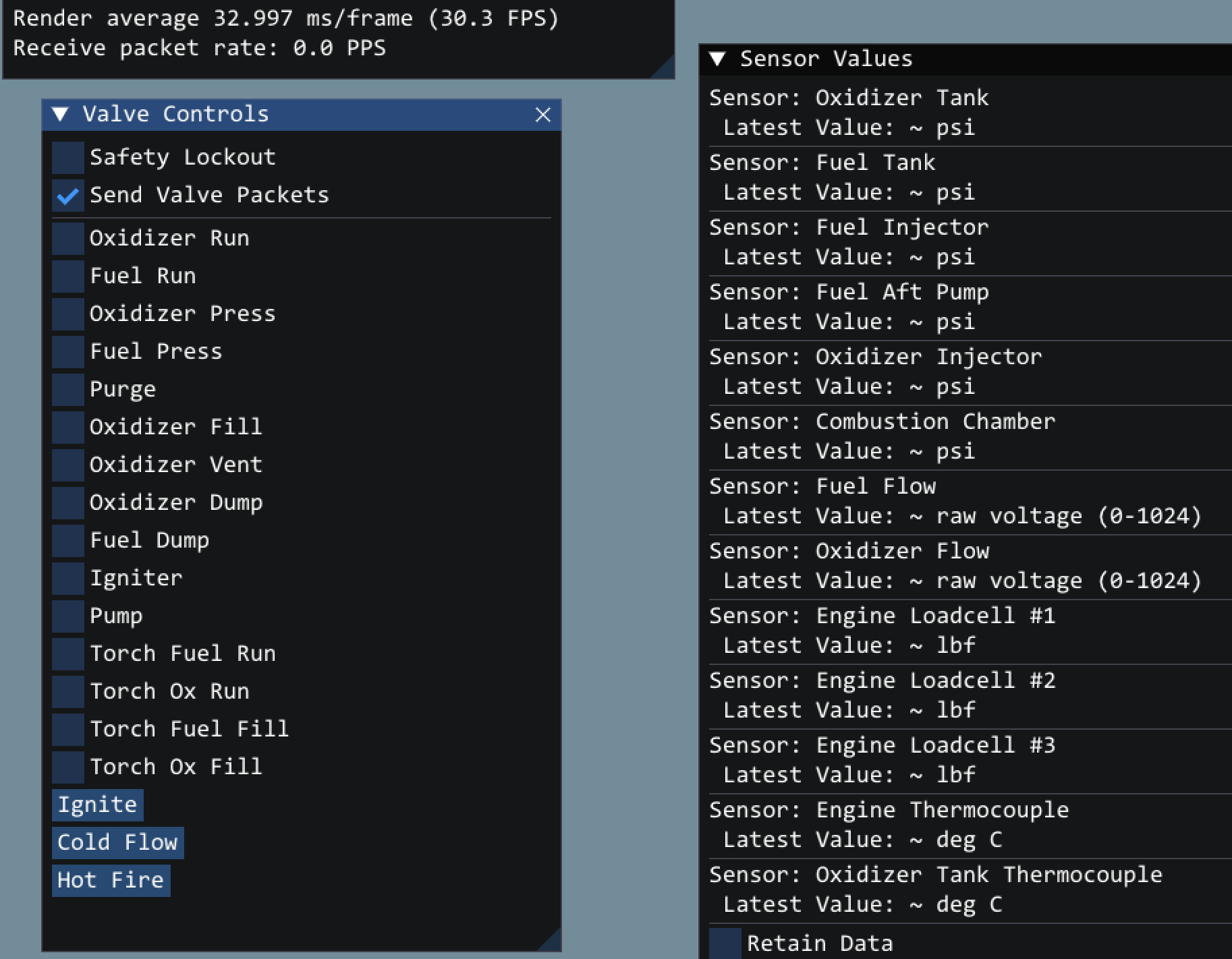
We operate most of the test stand systems through our DAQ, with the exception of the camera and the manual motor controller. These are run on separate computers, as it would not be ideal to constantly switch between tabs on a single system that directly controls the test stand while personnel are actively working around it.
Improvement:
Our DAQ system is fairly simple, and I believe there is significant room for improvement. For example, we could implement a more visual interface, such as a P&ID-style display showing valve states (open/closed), along with a graphing system to track pressures in real time and easily identify spikes or anomalies.
Use:
Our DAQ already provides a lot of useful functionality. It allows us to monitor live readings from all pressure transducers, load cells, thermocouples, and flow meters, while also giving us control over all valves on the system.
We also have a data retention mode that records all live data during a hot fire. In addition, there are preset commands such as Ignite, Cold Flow, and Hot Fire, which execute pre-programmed valve sequences to streamline operations and ensure consistency during testing.
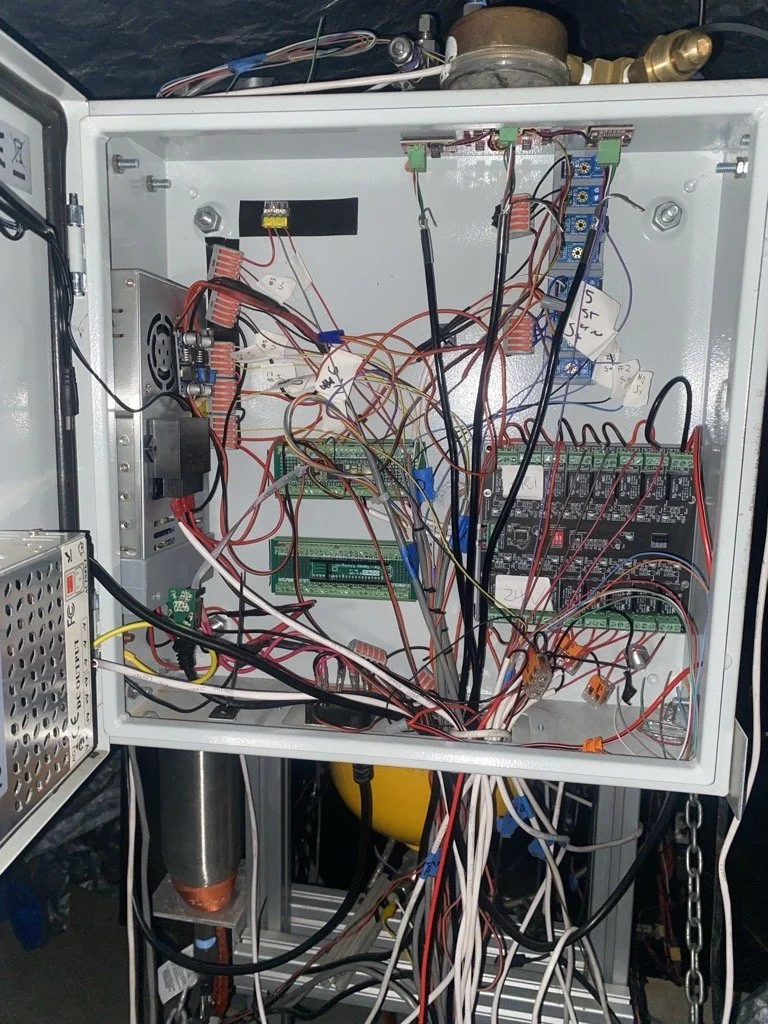
How our system works:
This is the control panel for our test stand. I connect an Ethernet cable from inside the propulsion lab directly to the stand, which is powered from the wall. Once connected, the Ethernet communicates with an onboard Teensy, which acts as the primary controller for the entire system.
When the Teensy receives signals, it sends outputs to a breaker system capable of handling higher power, allowing it to actuate the valves. The Teensy also collects voltage signals from all of the sensors.
One major issue we have encountered is that the Teensy is prone to failure, as it is only rated for 3.3V inputs. With the pump connected, voltage spikes can exceed this limit and short the board. Additionally, there are a large number of exposed wires coming out of the electrical box, which we plan to better organize and manage.
The rest of the components inside the electrical box include power converters and fuses, which help regulate voltage and protect the system from electrical damage.