RPA simulated Regeneratively Cooled Rocket Engine: If we want to be able to go up and down in our lander vehicle successfully we have to make an engine that will be able to last a long duration burn.Created a Metal 3d printed Regeneratively Cooled Rocket Engine
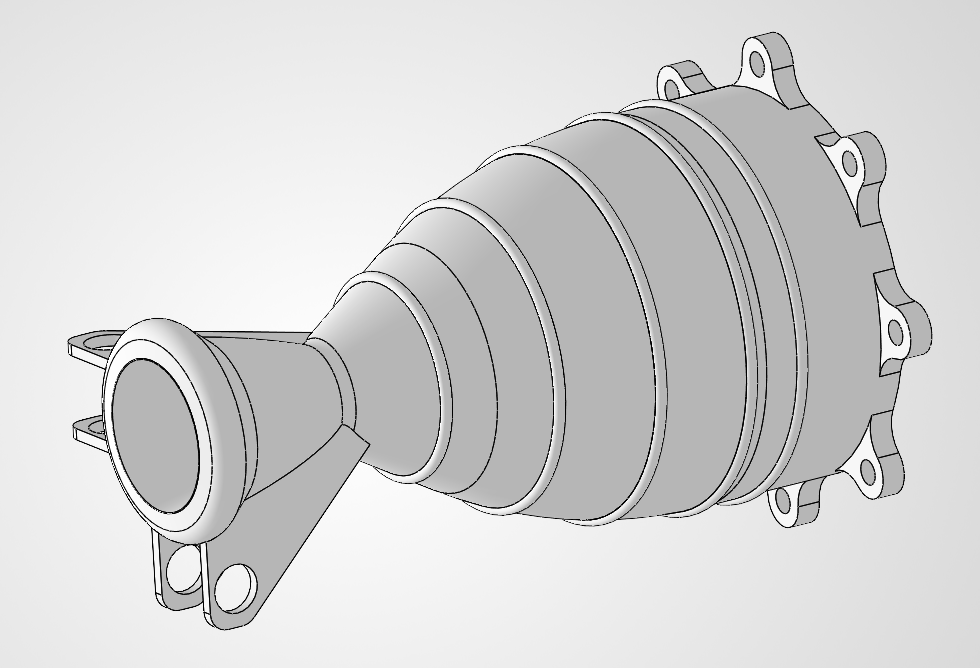
There were 3 different materials we could choose from to create this 3D printed Rocket Engine Stainless Steel 316L, AlSi10Mg, and Copper. We had to remove Copper because metal 3D printing out of Copper would cost around 20K vs. 300$ for the other 2 alternatives. Of the Stainless Steel 316L and AlSi10Mg, they both had their benefits and drawbacks, 1 major drawback of AlSi10Mg is its very low melting point of around 600°C, while Stainless Steel had a higher melting temp of 1400°C. This is good because it is really hard to manage the temperatures inside the chamber, so by having a higher melting point, I can ensure that the Engine will be able to handle the amount of stress experienced by the 600psi chamber pressure.
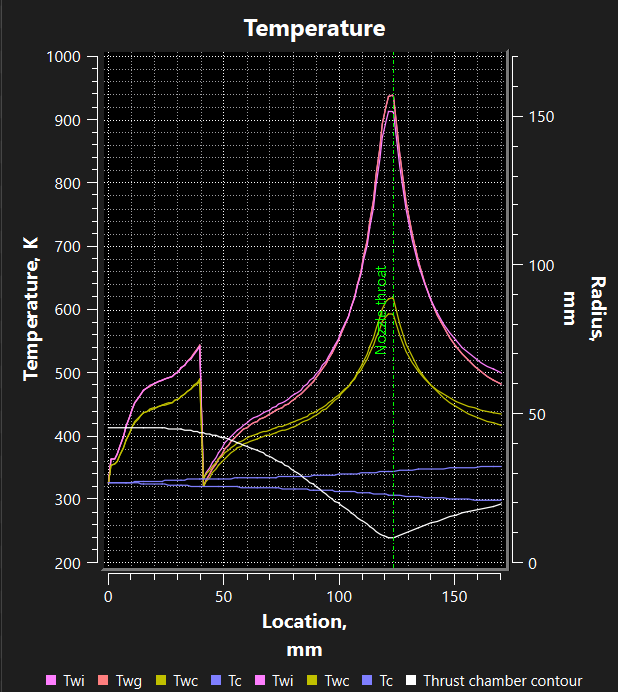
This temperature vs. Location graph shows us where the engine is hottest while we apply regenerative cooling and film cooling. Film Cooling is applied at the start of the chamber and again 40 mm below the start of the chamber, keeping temperatures manageable within the nozzle. This engine has dual-feed regen channels that travel up and down the chamber walls. Our temperature is Max at the throat, which experiences the greatest forces, which does raise concern, but I have made an Excel sheet that assumes different yield stresses for our material at certain temperatures, which puts us at a factor of safety above 1.
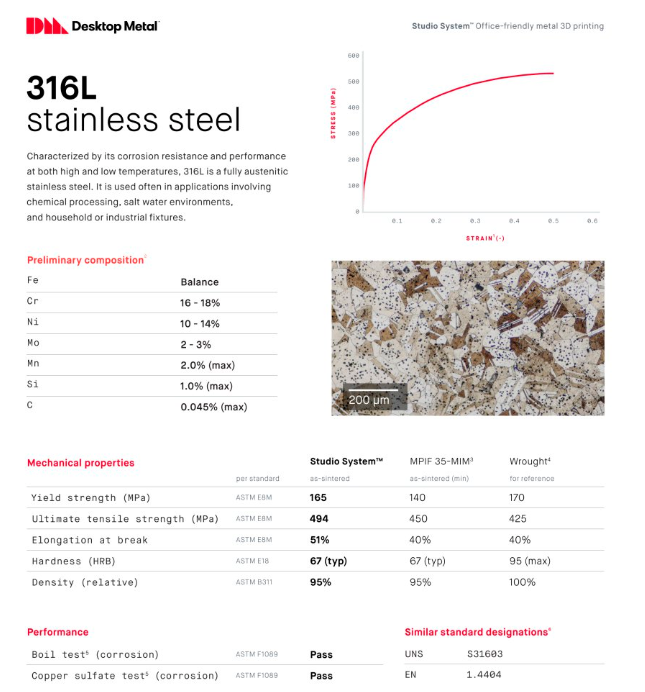
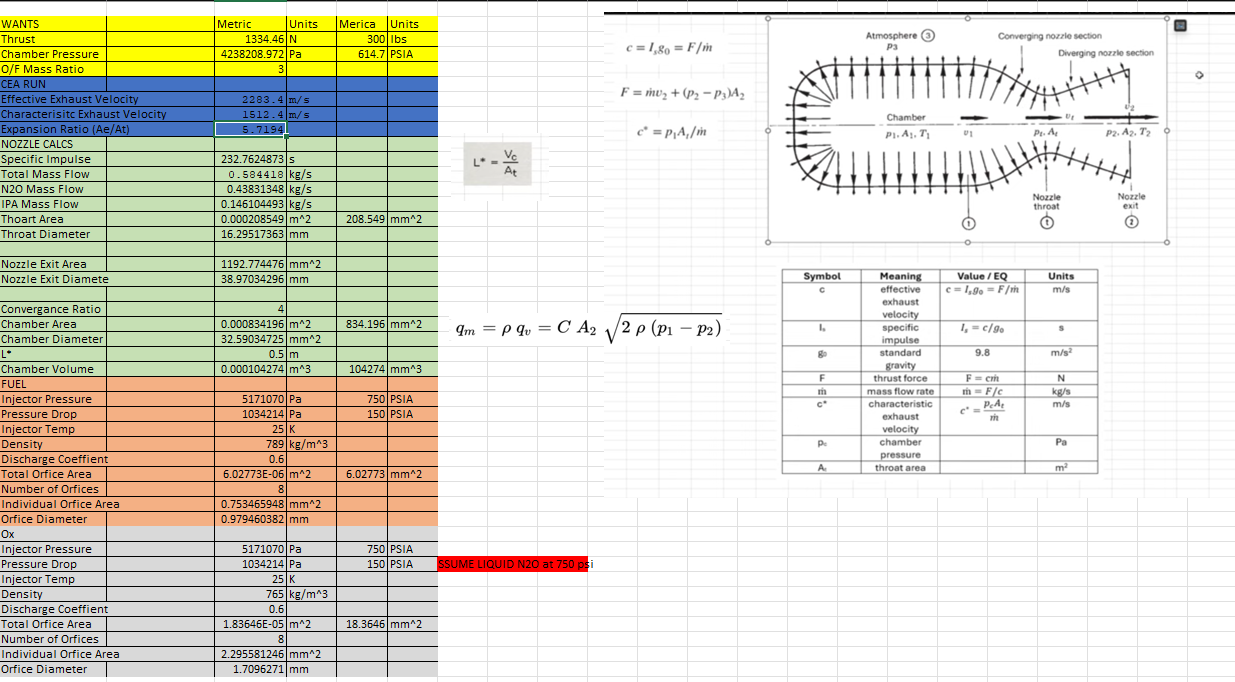
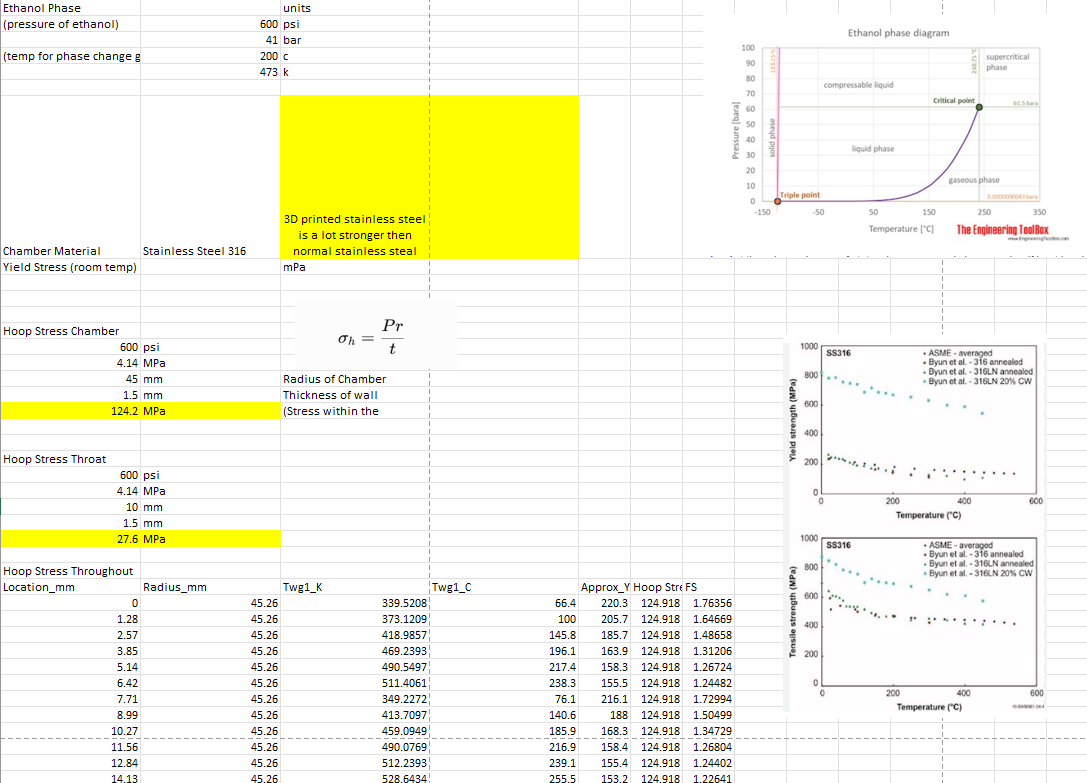
Here are some Excel sheets that explain how I got to my Orifice area for my Fuel and Oxidizer, I also did some stress calculations with calculated Factor of Safety to show that the engine would be able to without the amount of pressure it would be experiencing and at what temperature depicted by the graph which I converted to a function and plugged into my excel to see approximate yield stress of Stainless Steel 316L.
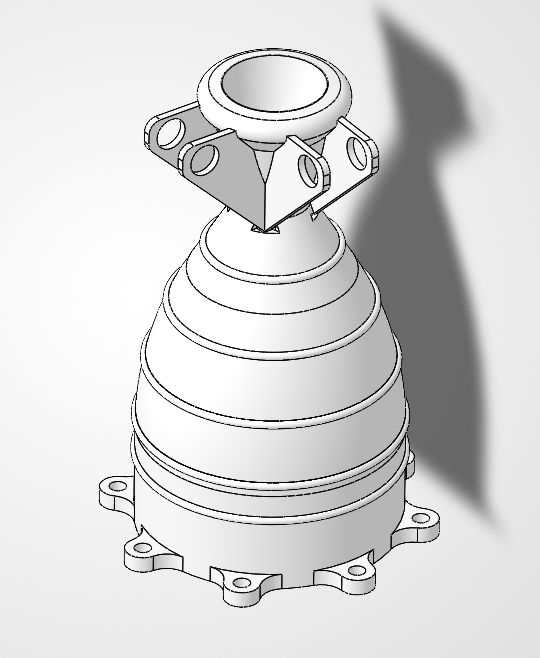
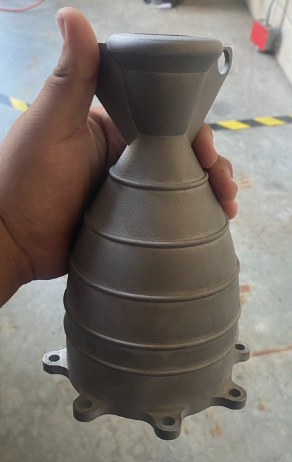
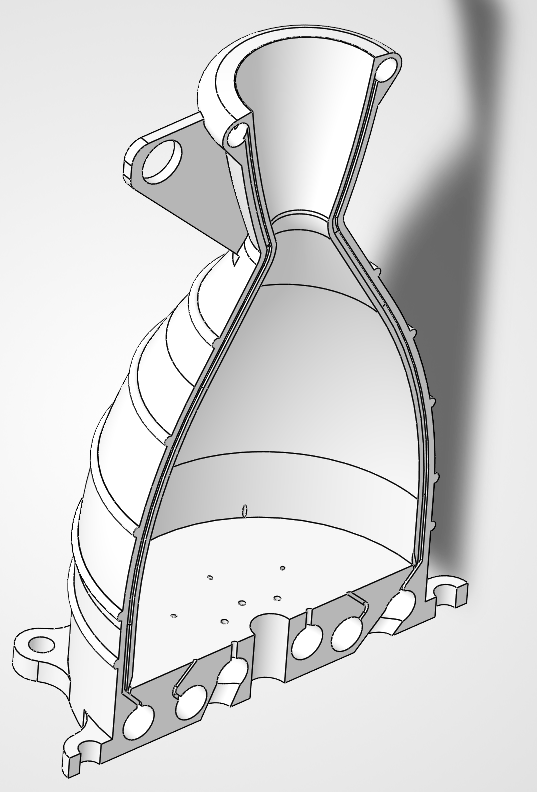
This Regen design was a combination of calculations from the Orifice sizes, thermal design by RPA for channel design, film cooling, and, lastly, nozzle geometry by RPA as well. I learned a lot of new design techniques, like sweep and geometry intersection, to be able to create the regen channels; those were the most challenging designs to get right.